DTMF Support for Voice AI
June 11, 2026

We’ve now released DTMF (Dual Tone Multi Frequency) support for Voice AI.
With this update, Talkative Voice AI can now process and understand digits entered via a customer’s dial pad when operating in speech-to-text mode.
That means customers can respond using spoken answers, keypad input, or a combination of both, depending on how your voice AI is configured.
This gives teams more flexibility when designing Voice AI journeys, especially for use cases where keypad input is faster, easier, or more reliable for the customer.
Voice AI is most effective when customers can interact in the way that feels simplest for them.
In many conversations, natural speech is the best option. Customers can explain what they need, answer questions in their own words, and move through the interaction without being forced into rigid menu paths.
But there are also moments where dial pad input makes sense. For example, a customer might need to enter:
In these moments, asking the customer to say a long string of digits aloud can create friction. It may also increase the chance of errors, especially if the caller is in a noisy environment or the number is long.
DTMF support gives customers another way to respond.
If they’d rather enter digits using their keypad, the voice bot can now receive that input and process it in a similar way to spoken numbers.
This update also makes it easier to create hybrid voice and IVR-style journeys.
Instead of choosing between conversational Voice AI and keypad-based flows, teams can combine both approaches in a single experience.
For example, your voice bot could ask a caller to briefly explain what they need, then prompt them to enter a reference number using their dial pad.
Or it could use natural language to route the customer, while still allowing DTMF input for specific steps where structured number entry is required.
This helps contact centres design voice journeys that are more practical, flexible, and customer-friendly.
The goal isn’t to recreate old IVR menus. It’s to use keypad input where it genuinely improves the journey, while still giving customers the benefits of natural, conversational AI.
DTMF support is already enabled for Talkative Voice AI agents using Speech-to-Text-to-Speech mode.
To set it up, add instructions to your Voice AI’s prompt explaining what to do when the customer presses digits (e.g. "If the customer enters their account number, look it up using...").
When a user enters numbers via their phone keypad, that input is passed to the bot in a similar way to spoken numbers. This means the bot can interpret and respond to dial pad digits as part of the conversation flow.
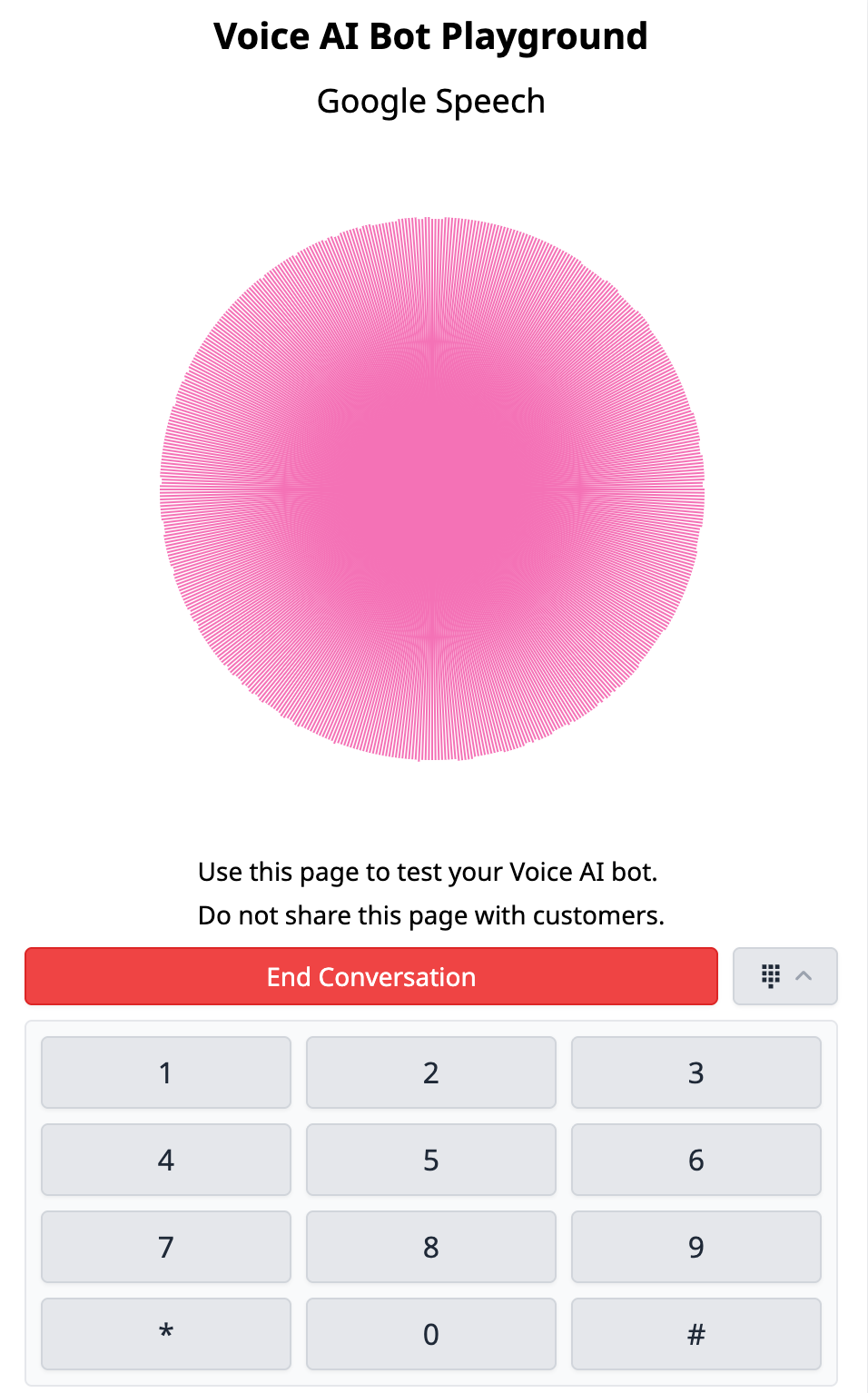
The Voice AI browser testing tool (Voice AI Playground) now includes a dial pad too.
This means you can use it to test DTMF input before going live. Teams can easily preview how the AI agent handles keypad inputs, verify that prompts work as expected, and refine the flow before customers use it.
Note: DTMF is not currently supported in Speech-to-Speech mode.
DTMF support gives Voice AI more flexibility in the moments where customers need to share numbers quickly and accurately.
By allowing voice bots to understand dial pad input, teams can create more practical journeys that combine conversational AI with structured keypad responses where needed.
That means less friction for customers, simpler testing for teams, and more options when building voice experiences that are designed around real customer behaviour.
If you’d like more help configuring DTMF support for your Voice AI, please reach out to your Customer Success Manager.
Are you new to Talkative and interested in Voice AI?
Book a demo with us today, or get in touch with our team to learn more.


